Lidocaine patches
£ 59.90
Save 15% — Get automatic deliveries weekly.
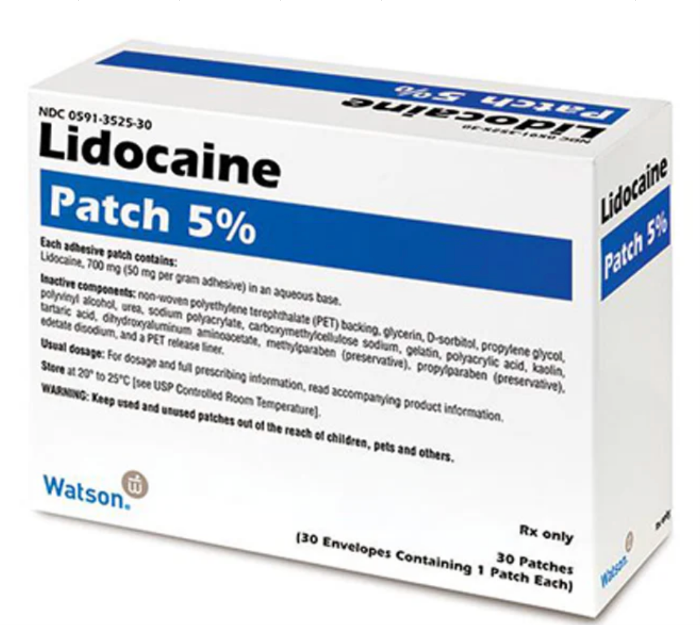
A lidocaine patch is a medicated plaster containing the local anesthetic lidocaine, used to numb skin and relieve localized nerve pain, especially the burning/shooting pain after shingles (post-herpetic neuralgia), or pain from nerve injury/surgery, by blocking pain signals. These patches work best for surface nerve pain, typically applied for up to 12 hours on, 12 hours off, and should be used under medical guidance as they aren’t suitable for deep or chronic pain and evidence for other uses is limited.
Common Uses (UK Context)
Post-Shingles Pain (Post-Herpetic Neuralgia):
Their primary licensed use is for this type of nerve pain after a shingles infection.
Other Nerve Pain:
May be used for nerve pain following surgery (e.g., mastectomy), nerve injury, or painful diabetic neuropathy.
How to Use
Application:
Wash hands, apply to clean, dry skin in the painful area (can be cut to size), wearing up to 3 patches at once for a maximum of 12 hours.
Removal:
Remove for 12 hours before reapplying to avoid skin irritation and allow the skin to rest.
Application: Apply the patch to clean, dry, intact skin. Do not apply to broken, inflamed, or infected skin/open wounds.
Duration: Follow package or doctor instructions carefully. OTC 4% patches can be used up to 3-4 times daily for no more than 8 hours per application. Prescription 5% patches are typically worn for a maximum of 12 hours within a 24-hour period, followed by a 12-hour patch-free period.
Safety: Do not use with a heating pad or electric blanket, as heat can increase lidocaine absorption. Fold used patches in half, sticky sides together, and dispose of them safely away from children and pets, as they still contain active medication.
Side Effects: Most side effects are minor and localized, such as redness or irritation at the application site. Serious side effects are rare but can occur if too much lidocaine is absorbed, so follow all instructions closely.

Legal
Contact us
© 2025 UK Health Meds. All Rights Reserved.